

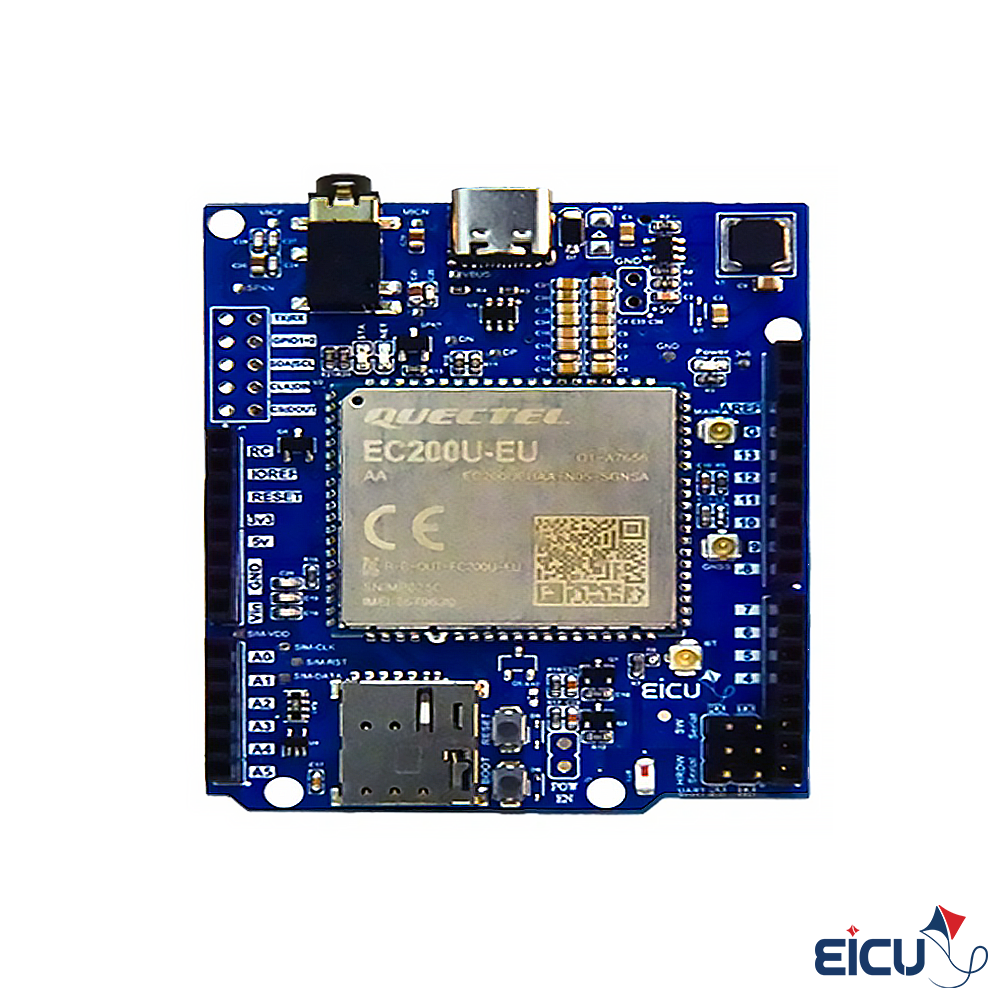
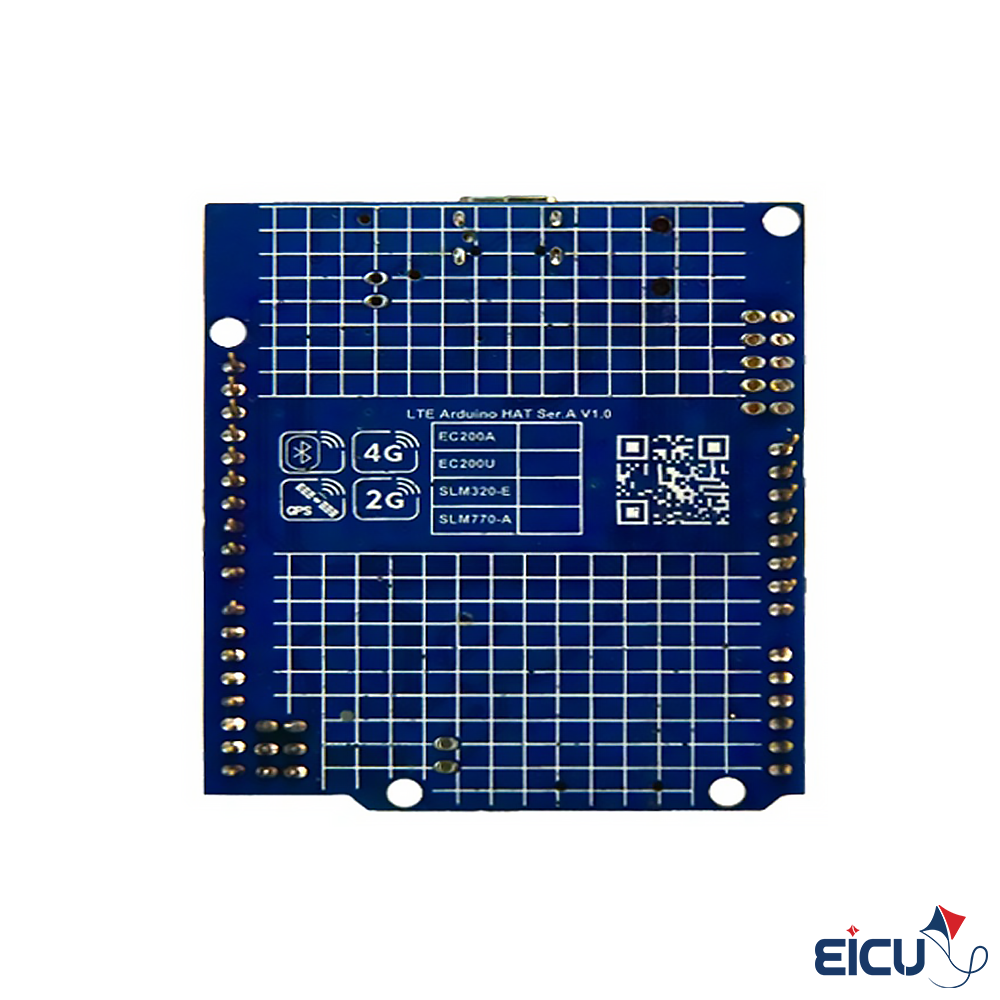
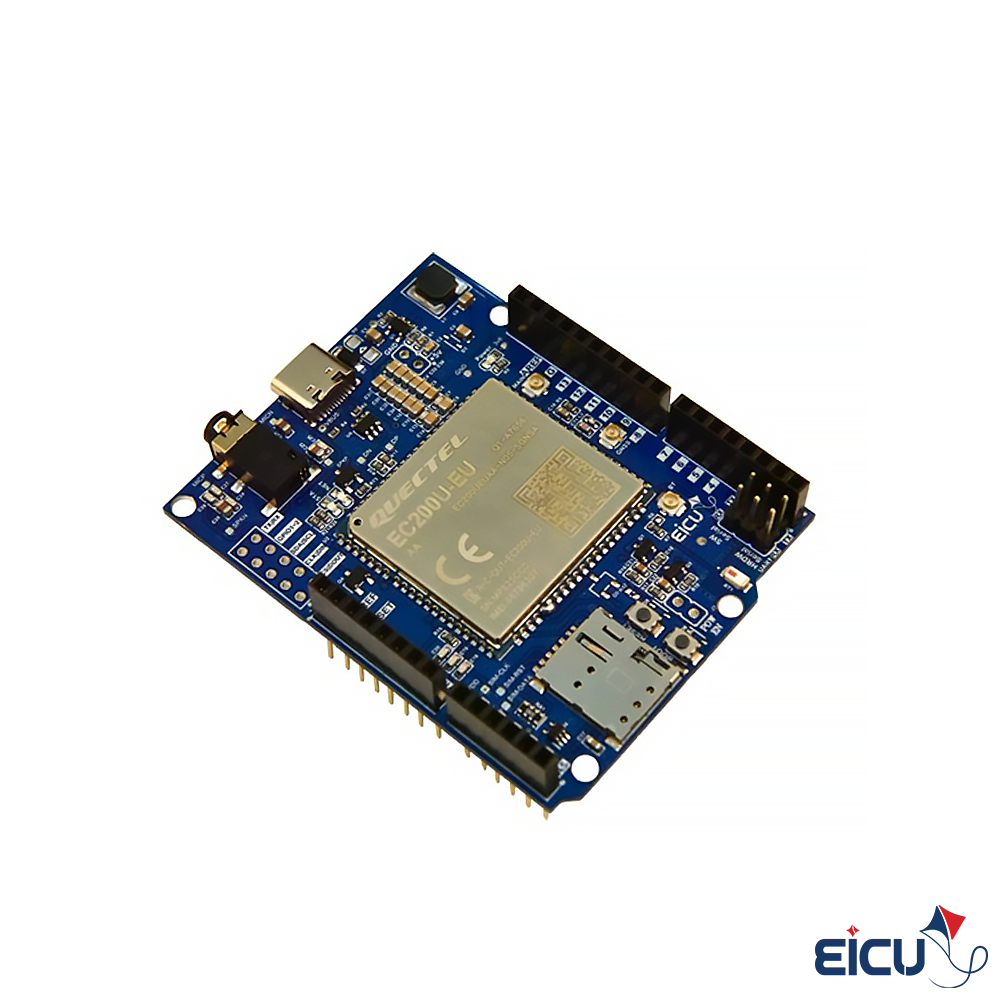
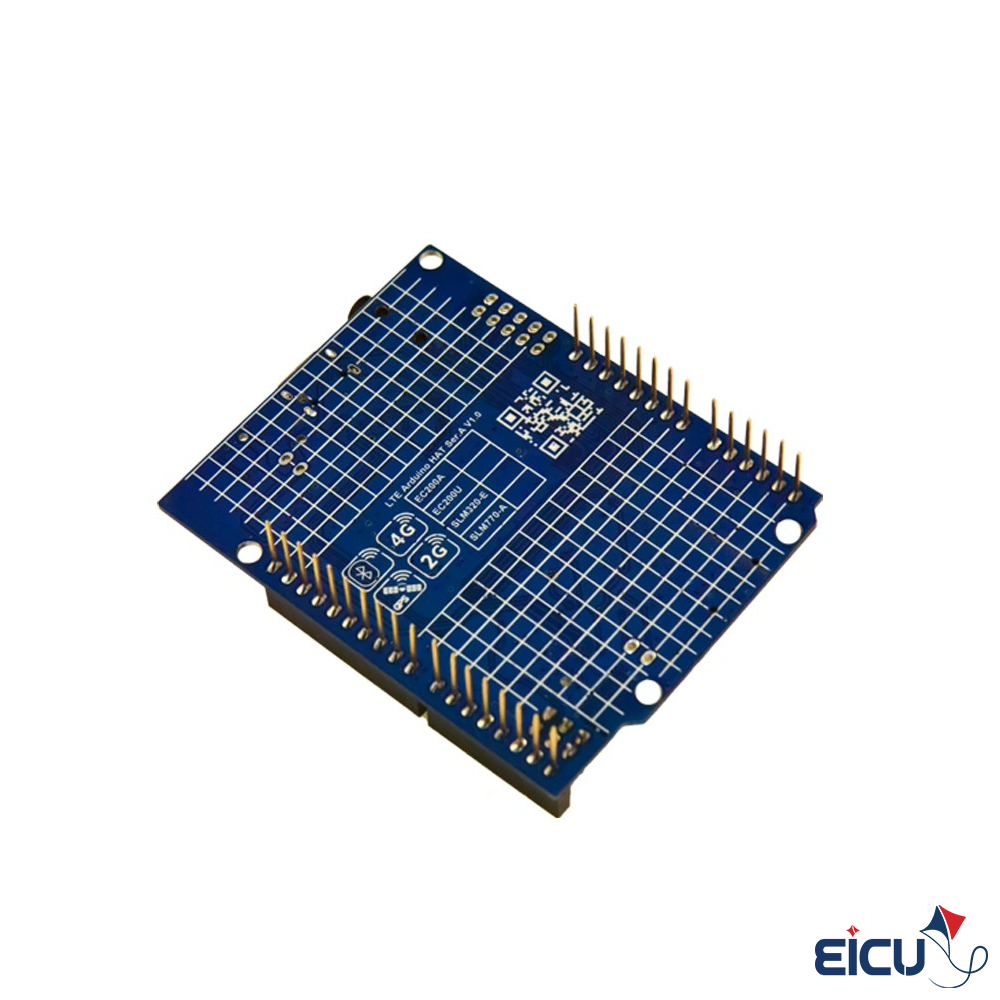
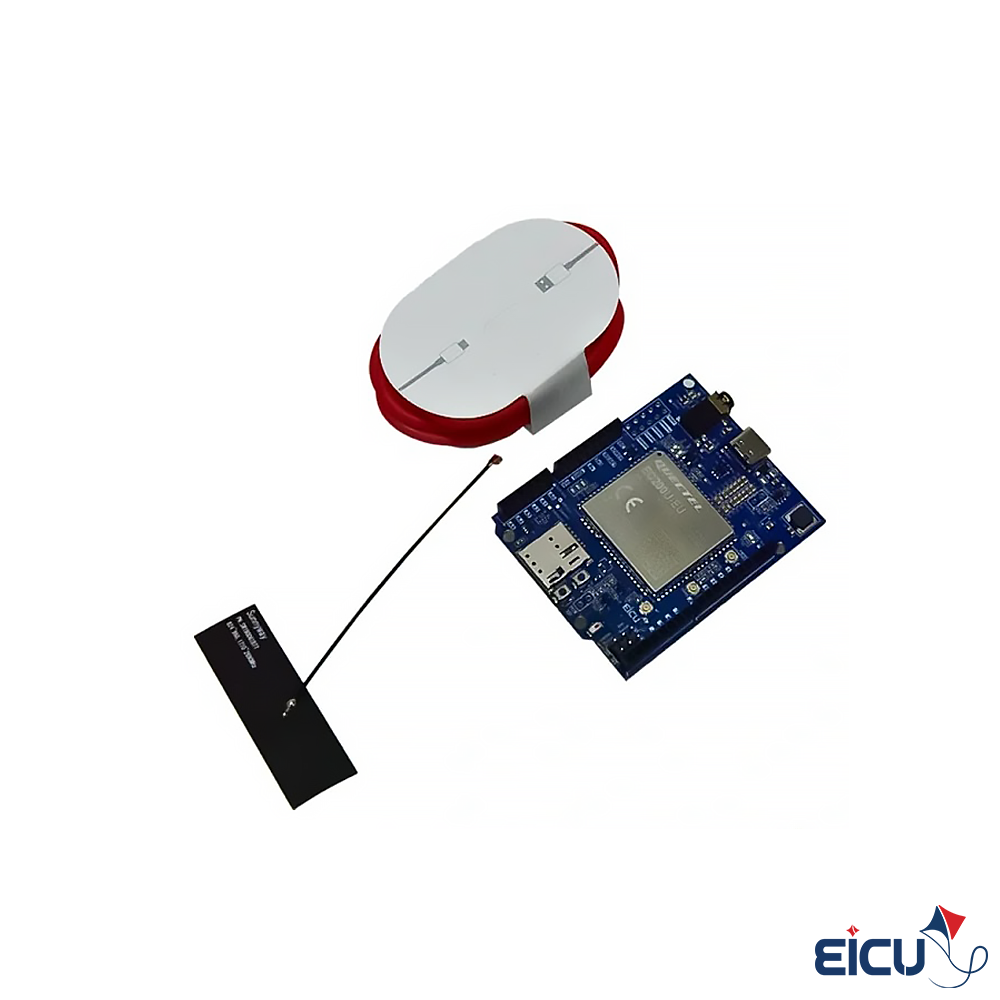
EC200U Arduino Hat Development Board Supporting LTE Cat 1/GSM/GPRS/GPS/GLONASS/Bluetooth
10 in stock
- Quad-band GSM + LTE-FDD B1/B3 support
- Data Rates Up to 10 Mbps downlink and 5 Mbps uplink
- Full 3GPP + Quectel enhanced AT commands
- GPS + GLONASS with QuecFastFix
- FOTA for remote firmware updates
Compare
EC200U Arduino Hat Development Board Description
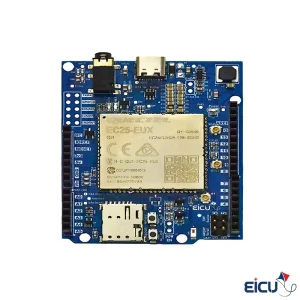
The LTE header development board is a compact and portable board designed specifically for Arduino. The main equipped modules are the LTE series wireless communication modules. The development board has a USB Type-C interface, making it convenient for development. Developers only need a USB Type-C cable to easily use the Development board. Additionally, the development board is compatible with the expansion board of Arduino, which can be directly used on the development board.
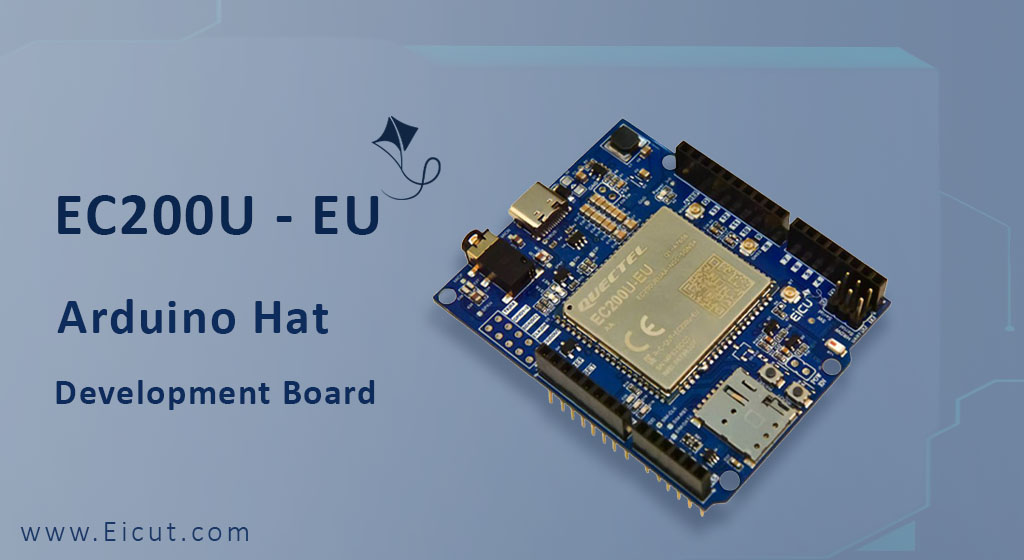
EC200U Arduino Hat Development Board Features
- Cellular Frequency Bands: Supports quad-band GSM/GPRS/EDGE (850/900/1800/1900 MHz) as well as LTE-FDD Band 1 (2100 MHz), Band 3 (1800 MHz), and additional LTE bands as specified.
- AT Commands: Fully compliant with 3GPP TS 27.007 and 3GPP TS 27.005 standards, plus support for Quectel proprietary enhanced AT commands for extended functionality and easier integration.
- Network Protocols: Built-in protocol stack supporting TCP/IP, UDP, HTTP, FTP, and PPP, enabling direct internet connectivity, file transfers, web requests, and transparent data transmission over cellular networks.
- Jamming Detection: Integrated jamming detection feature that monitors RF signal interference and alerts the system when potential signal jamming or spoofing attempts are detected, enhancing security in critical applications.
- FOTA (Firmware Over-The-Air): Full support for remote firmware updates over the cellular network, allowing seamless, secure, and cost-effective module upgrades without physical access.
- Single SIM Single Standby: The board is equipped with a single nano-SIM card slot and operates in Single SIM Single Standby mode.
- GNSS Positioning: Integrated multi-constellation GNSS receiver supporting both GPS and GLONASS simultaneously for faster, more accurate, and reliable positioning even in challenging urban or partially obstructed environments.
- QuecFastFix Online/Offline A-GNSS: Quectel’s proprietary fast-fix technology that significantly reduces Time-To-First-Fix (TTFF) by using predictive ephemeris data (online or offline), ideal for quick location acquisition in tracking and navigation applications.
Downloads
| Cellular category | LTE Cat 1 |
|---|---|
| Cellular Frequency Bands | Quad-band: 850/900/1800/1900MHz/LTE-FDD B1/LTE-FDD B3… |
| Data Rates | It delivers maximum data rates up to 10 Mbps downlink and 5 Mbps uplink. |
| Interfaces | USB Type-C connector |
| Protocols | supporting TCP/IP, UDP, HTTP, FTP, and PPP, enabling direct internet connectivity, file transfers, web requests, and transparent data transmission over cellular networks. |
| GNSS | GPS + GLONASS with QuecFastFix |
Based on 0 reviews
Be the first to review “EC200U Arduino Hat Development Board Supporting LTE Cat 1/GSM/GPRS/GPS/GLONASS/Bluetooth”
You must be logged in to post a review.
Related products
-
2G / GSM / GPRS, HATs and Shields
MC60 Arduino HAT V1.0 Supporting quad-band GSM/GPRS/GPS/GLONASS/Audio/FOTA with Jamming Detection
 2G / GSM / GPRS, HATs and Shields
MC60 Arduino HAT V1.0 Supporting quad-band GSM/GPRS/GPS/GLONASS/Audio/FOTA with Jamming Detection
- Base Processor : MC60
- Compatible with Arduino
- Can be used as Stand Alone evaluation board
- 3.5mm audio output and microphone input jack
- SIM card socket
- SD memory card support
- External GSM antenna
- Active GNSS Support
SKU: E0555 -
2G / GSM / GPRS, HATs and Shields
M66 Arduino Hat V1.0 Supporting quad-band GSM/GPRS/Audio/FOTA with Jamming Detection
 2G / GSM / GPRS, HATs and Shields
M66 Arduino Hat V1.0 Supporting quad-band GSM/GPRS/Audio/FOTA with Jamming Detection
- Base Processor : MC60
- Compatible with Arduino
- Can be used as Stand Alone evaluation board
- 3.5mm audio output and microphone input jack
- SIM card socket
- SD memory card support
- External GSM antenna
- Active GNSS Support
SKU: E0595
There are no reviews yet.